The allure of Spiti Valley is undeniable. Imagine riding your motorcycle through a high-altitude desert, surrounded by towering, snow-capped peaks, ancient monasteries clinging to cliffs, and a stark, breathtaking landscape that feels truly out of this world. It's a journey that calls to the soul of every adventurer. But as magical as Spiti is, it's also incredibly demanding, especially for beginner riders. To truly conquer the Himalayas safely and enjoy every moment, understanding the best riding gear for Spiti Valley is not just important – it's absolutely critical.
Here at MileMarked, we’re dedicated to helping you plan verified, unforgettable motorcycle trips across India, ensuring you’re prepared for every challenge. This comprehensive guide is specifically tailored for you, the beginner rider, to equip you with the knowledge needed to choose the right gear for your Spiti adventure. Proper riding gear isn’t just about comfort; it’s your first line of defense against the elements, potential falls, and the unique rigors of the "Middle Land." Let’s gear up for an epic, safe, and comfortable journey! Once you’re geared up, check out the verified Delhi to Spiti Valley Circuit route on MileMarked for a complete day-by-day itinerary.
Quick Summary: Essential Spiti Valley Riding Gear
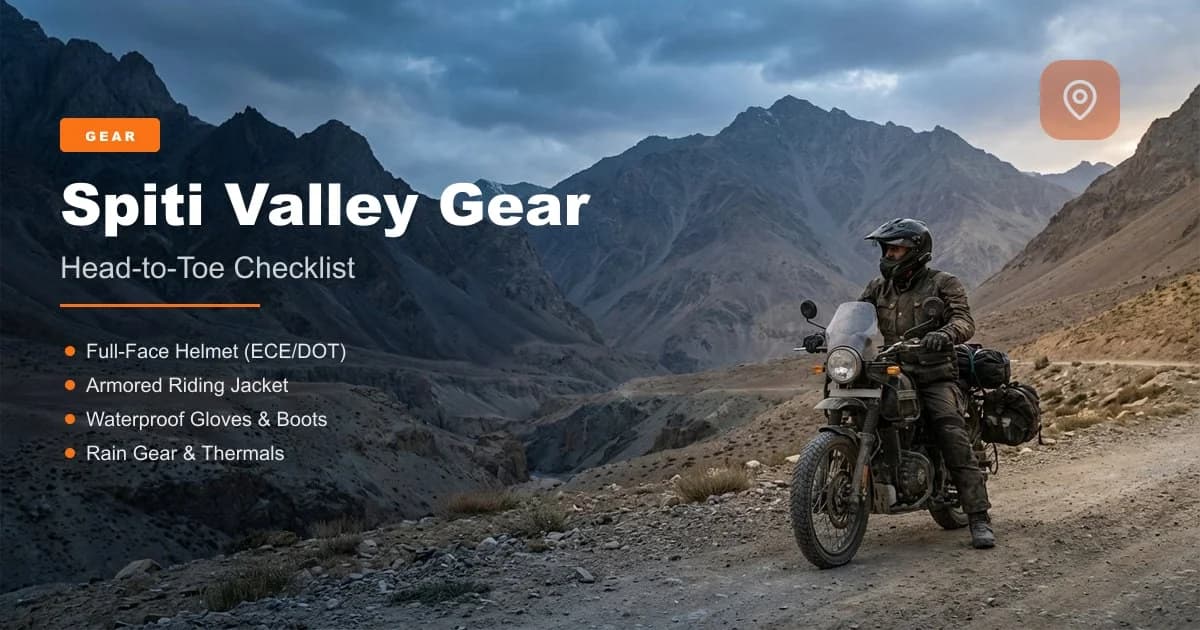
- Non-Negotiable Kit: Full-face helmet (ECE/DOT), CE-rated riding jacket, waterproof gloves, and over-ankle waterproof boots — all mandatory at 3,800m altitude.
- Temperature Range: Pack for -5°C to 25°C — Kunzum La (4,590m) can be near-freezing even in peak summer (June-August).
- Layering System: 3-4 layers minimum — thermal base → fleece mid-layer → waterproof riding jacket → rain suit on top.
- Budget Guide: Splurge on helmet (₹8,000+) and jacket (₹10,000+). Save on thermals — quality trekking brands work equally well.
- Key Accessory: A hydration pack — altitude dehydration is subtle and dangerous. Drink 3-4 litres of water daily.
Verified by MileMarked · Last verified: March 2026
Understanding Spiti's Extreme Environment: What Your Gear Fights Against
Before we dive into specific gear, let's understand why Spiti demands specialized preparation. The Spiti Valley isn't just another road trip; it's an expedition into one of the world's most challenging yet rewarding terrains. Your gear needs to be ready to combat these extreme conditions:
Altitude Sickness and Thin Air
The average altitude of Kaza, the region's capital, is approximately 3,800 meters (12,500 feet). As you ascend, the air becomes significantly thinner, reducing oxygen levels. This isn't just a physical challenge; it means your body works harder, making you more susceptible to fatigue and altitude sickness. Your gear must support your body's ability to conserve energy and stay warm.
Key Fact: Spiti Valley's average altitude is around 3,800 meters (12,500 feet), leading to thinner air and increased UV exposure.
Drastic Temperature Fluctuations
Spiti's weather is famously unpredictable. Days can be surprisingly warm and sunny, but temperatures plunge dramatically as soon as the sun sets, often dropping below freezing even in peak summer months. You'll encounter biting cold winds, especially on high mountain passes like Kunzum La or Rohtang (if applicable to your route). Your gear needs to provide insulation that can be adapted quickly.
Unforgiving Terrain and Road Conditions
Forget smooth highways. Spiti's roads are notoriously challenging. You'll navigate unpaved sections, loose gravel, slush from melting snow, and numerous water crossings (known as nalas). Occasional black ice can be present even in summer, especially in shaded areas or early mornings. Robust, protective, and waterproof gear is non-negotiable.
Isolation and Limited Resources
Spiti Valley is remote. While its beauty is boundless, access to immediate medical help, repair shops, or gear replacement is extremely limited once you venture past Kaza or Manali. What you pack is what you have, making pre-trip preparation paramount.
Sudden Weather Extremes
Even during the "best" riding season, sudden rain, snow, or hailstorms are common. A clear morning can quickly turn into a blizzard on a high pass. Your gear must offer reliable protection against moisture and extreme cold, ready for anything the mountains throw at you.
Key Fact: Temperatures can drop below freezing even in summer nights, and sudden snow/rain are common. Road conditions are notoriously challenging: unpaved sections, slush, gravel, and numerous water crossings (nalas).
The Head-to-Toe Spiti Valley Riding Gear Checklist (Beginner's Edition)
Now that you understand the challenges, let's break down the essential gear you'll need from head to toe. This isn't just a list; it's about making informed choices for your safety and comfort.
Helmet: Your Most Crucial Piece of Protection
Your helmet is non-negotiable. For Spiti, a full-face helmet is strongly recommended over open-face or modular options. It offers maximum protection against impact, dust, and the biting cold winds.
- Certification: Ensure it's ECE and/or DOT certified, guaranteeing it meets safety standards.
- Fit: It should be snug but comfortable, with no pressure points. An ill-fitting helmet can be dangerous and uncomfortable on long rides.
- Ventilation: Good ventilation is crucial to prevent fogging and keep you comfortable during warmer stretches.
- Visor: A clear, scratch-resistant visor is essential. Consider an anti-fog insert (Pinlock) or anti-fog spray. A dark visor can be useful for bright days, but you'll need a clear one for low light or night riding.
Riding Jacket: Your Multi-Layered Shield
This is your primary defense against cold, impact, and abrasion. For Spiti, a versatile, multi-layer jacket is key.
- Armor: Look for CE-rated armor in the shoulders, elbows, and back. This offers certified protection against impacts.
- Multi-Layer System: The ideal jacket will have a removable waterproof liner and a removable thermal liner. This allows you to adapt to Spiti's rapidly changing temperatures.
- Abrasion Resistance: The outer shell should be made from durable, abrasion-resistant materials like Cordura.
- High Visibility: Bright colors or reflective elements are a bonus, increasing your visibility to other vehicles on remote roads.
Riding Pants: Protecting Your Lower Half
Just like your jacket, riding pants are vital for protection and comfort.
- Armor: CE-rated armor in the knees and hips is a must.
- Waterproof & Abrasion-Resistant: Choose pants with a waterproof membrane and durable outer material.
- Style: Over-the-boot style pants are generally preferred as they prevent water from seeping into your boots during water crossings and keep dust out.
- Fit: Ensure they allow for comfortable movement on and off the bike, especially when layered over thermals.
Gloves: Two Pairs Are Better Than One
Your hands will bear the brunt of cold winds and vibrations. You'll need more than just one pair.
- Winter Gloves: A pair of waterproof, insulated winter riding gloves is essential for the colder stretches and high passes. Look for good grip and dexterity.
- Lighter/Protective Gloves: A second, lighter pair of protective gloves can be used for warmer sections of the ride or as a backup if your main gloves get wet. Ensure they still offer knuckle and palm protection.
Riding Boots: Ankle Protection is Paramount
Regular shoes simply won't cut it. Riding boots are designed for protection and grip.
- Ankle Protection: Ensure they cover and protect your ankles, which are vulnerable in a fall.
- Waterproof: Absolutely critical for water crossings and sudden rain/snow. Look for boots with a waterproof membrane.
- Sturdy Sole: A good, grippy sole provides stability on slippery surfaces and when walking around.
- Comfort: While protective, they should also be comfortable enough for long hours in the saddle and occasional walking. Touring or adventure boots are excellent choices.
Base Layers (Thermals): Your Foundation for Warmth
This is where the 'onion' principle begins. Base layers are worn directly against your skin.
- Moisture-Wicking: Choose thermals made from synthetic materials or merino wool. These wick sweat away from your body, keeping you dry and preventing chills. Cotton is a definite no-go as it retains moisture.
- Quick-Drying: Essential for multi-day trips where you might need to wash and dry them overnight.
- Full Body: Get both upper and lower body thermals.
Mid-Layers: The Insulating Core
Worn over your base layers, mid-layers provide crucial insulation.
- Fleece Jacket/Insulated Vest: A good quality fleece jacket or an insulated vest works perfectly. They trap warm air and are easy to add or remove as temperatures change.
- Lightweight: Choose something that can be compressed easily for packing.
Rain Gear: Non-Negotiable Protection
Even if your jacket and pants are "water-resistant," dedicated rain gear is a must for Spiti.
- Dedicated Rain Suit: A separate, waterproof rain jacket and pants worn over your riding gear provides the best defense against heavy downpours or snow.
- Packability: Look for lightweight, packable options that can be deployed quickly.
- Sealed Seams: Ensure all seams are taped or sealed to prevent water ingress.
Beyond the Basics: Essential Accessories & Motorcycle Spares
Your gear list extends beyond what you wear. These items will enhance your safety, comfort, and preparedness.
Hydration Pack: Stay Hydrated at Altitude
Dehydration is a serious risk at high altitudes. A hydration pack (like a CamelBak) allows you to drink easily while riding, encouraging consistent hydration.
First-Aid Kit: Be Prepared for Emergencies
A comprehensive first-aid kit is critical. Include:
- Altitude sickness medication (Diamox, consult your doctor).
- Pain relievers, anti-inflammatories.
- Antiseptic wipes, bandages, medical tape.
- Blister treatment, rehydration salts.
- Any personal medications.
Sun Protection: Guard Against Harsh UV
The sun at high altitude is incredibly intense.
- High SPF Sunscreen: Apply generously and often.
- UV-Protected Lip Balm: Prevent chapped and sunburnt lips.
- Sunglasses: Polarized sunglasses are preferred to reduce glare from snow and water.
Power Bank/Charger: Keep Your Devices Alive
Charging points are sparse in remote Spiti. A high-capacity power bank is essential for your phone, camera, and other electronics.
Navigation Tools: Don't Get Lost
Reliance solely on mobile network is foolish here.
- Offline Maps: Download maps for the entire region (Google Maps, Maps.me, Sygic).
- Physical Map: A traditional paper map can be a lifesaver if electronics fail.
- Compass: Basic but reliable.
Tool Kit & Spares: Self-Sufficiency is Key
Basic mechanical issues can halt your trip.
- Basic Tools: Spanner set, screwdriver set, pliers, adjustable wrench.
- Puncture Repair Kit: With a portable air pump/CO2 canisters.
- Spare Cables: Clutch and accelerator cables are common failure points.
- Spare Tube: If your bike uses tube tires (most Royal Enfields do).
- Fuses, Spark Plug: Small, easily replaceable parts.
Headlamp/Torch: Illuminate the Darkness
For emergencies, setting up camp, or just finding things in your bag in low light.
Neck Warmer/Balaclava: A Small Item, Huge Impact
Crucial for sealing the gap between your helmet and jacket, protecting your neck and face from bitter cold winds and dust.
Key Fact: Sunburn and dehydration are common at high altitudes due to intense UV radiation and dry air. Hypothermia and frostbite are real risks if not adequately protected against the cold.
Choosing Your Gear Wisely: Tips for Beginner Riders
As a beginner, navigating the vast world of riding gear can be overwhelming. Here's how to make smart choices for your Spiti adventure:
Prioritize Protection: Safety First, Always
Never compromise on safety. Always opt for gear that is CE-rated. This certification ensures the gear has met specific European standards for impact protection and abrasion resistance. It's an investment in your well-being.
Layering Strategy: The 'Onion' Principle
Spiti's fluctuating temperatures make layering indispensable. Think of it like an onion: multiple thin layers are far more effective and adaptable than one thick layer.
| Layer Type | Function | Material Suggestions | Key Benefit |
|---|---|---|---|
| Base | Wicks moisture, provides initial warmth | Merino wool, synthetic blends (polyester, polypropylene) | Keeps you dry and comfortable |
| Mid | Insulates, traps warmth | Fleece, down/Insulated vest | Keeps you warm in cold conditions |
| Outer | Shields from wind, rain, abrasion | Riding jacket (Cordura/mesh with waterproof liner), riding pants | Full-body weather protection |
Gear Testing: Don't Wait Until the Mountains
Before your Spiti trip, test your complete gear setup on a shorter local ride. This helps you identify pressure points, overheating, or inadequate warmth before you're 3,500 meters above sea level. Getting your gear right is as important as planning your route.
Budget vs. Performance: Where to Splurge, Where to Save
- Splurge On: Your helmet and riding jacket. These are your primary life-saving items. Do not cut corners here.
- Mid-Range: Riding pants, gloves, and boots. Good quality, CE-rated options are widely available in the ₹3,000–₹8,000 range.
- Save On: Base layers and mid-layers. A good quality trekking base layer works perfectly and costs a fraction of motorcycle-specific options.
Your Spiti Valley Ride Starts Here
Preparing the right gear is half the battle. The other half is having a verified, accurate route plan so you know exactly what you're riding into each day. Fuel stops in Spiti are sparse, road conditions change with the weather, and AMS can slow your schedule — having a proper itinerary isn't optional, it's essential.
Download the verified Delhi to Spiti Valley Circuit itinerary — it includes day-by-day breakdowns, confirmed fuel stops, accommodation options, and community-verified road conditions. Everything you need before you twist that throttle.
Ride prepared. Ride safe. Ride Spiti.
Frequently Asked Questions: Spiti Valley Riding Gear
What is the minimum gear required for a Spiti Valley bike trip?
At a minimum, you need: a full-face helmet (ECE/DOT certified), a riding jacket with CE-rated armor (waterproof), riding gloves (winter and light pair), over-ankle riding boots (waterproof), and rain gear. Spiti's extreme altitude and unpredictable weather make all of these non-negotiable for safety.
How many clothing layers do I need for Spiti Valley?
Plan for 3-4 layers: (1) moisture-wicking thermal base layer, (2) fleece or insulated mid-layer, (3) waterproof riding jacket as outer layer, and (4) dedicated rain gear for sudden downpours. The "more layers" approach beats having one thick jacket — you can add or remove layers as temperature swings from 0°C at night to 25°C in afternoon sun.
Is a full-face helmet necessary for Spiti Valley?
Yes, absolutely. The roads have loose gravel, dust, high UV exposure, and unpredictable cold winds. An open-face helmet leaves your face and chin exposed. A full-face helmet with anti-fog visor (Pinlock insert) is the only appropriate choice for Spiti's varied conditions.
What temperature gear should I pack for Spiti Valley?
Pack for a temperature range of -5°C to 25°C. Expect near-freezing temperatures at high passes (Kunzum La at 4,590m, Rohtang at 3,978m) even in summer (June-August). Nights in Kaza drop to 5-10°C. Pack thermal base layers, a warm fleece, and waterproof outer layer for full coverage across this range.