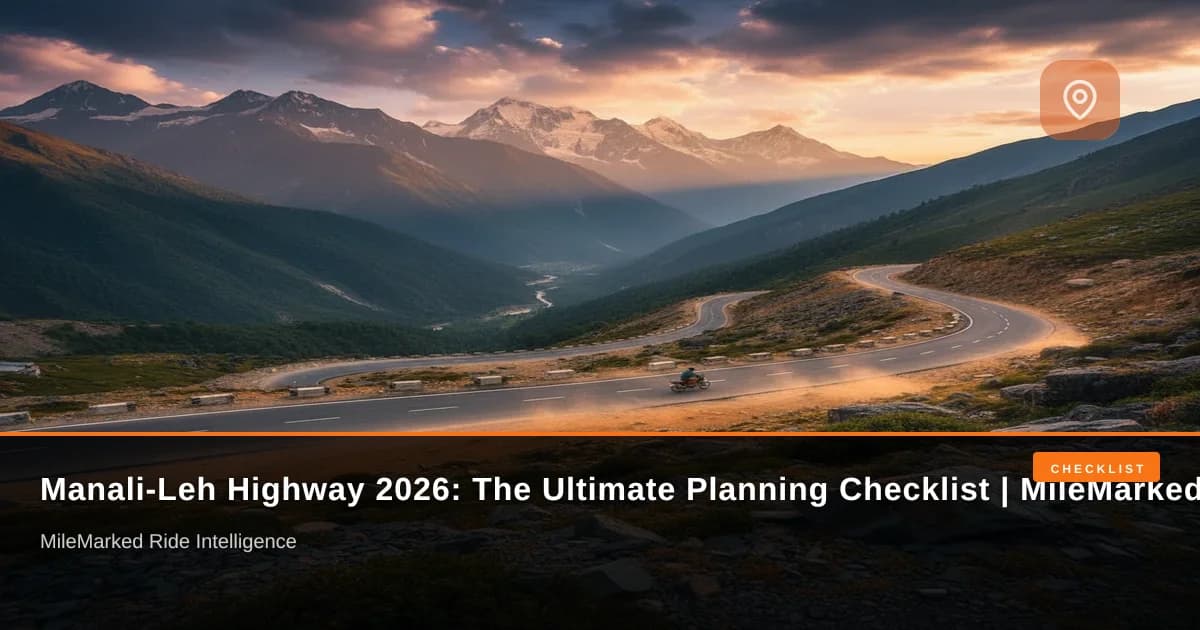
Stop relying on outdated blogs and tour operator sales pitches. Most guides are trying to sell you a package, not empower you to ride your own. This is the only Manali-Leh Highway: Your Pre-Opening Planning Checklist for the 2026 season built on hard data, verifiable logistics, and the real-world challenges Indian riders face. Forget the fluffy travelogues; this is your operational manual for taming the world's most iconic high-altitude road.
This guide isn't about the "feeling" of the Himalayas. It's about the three pillars that make or break this ride: Fuel Logistics, Altitude Science, and Permit Realities. We'll give you the exact numbers, the non-negotiable rules, and the insider knowledge that separates a successful expedition from a roadside disaster.
Quick Summary:
- Fuel Dead Zone: Prepare for a 345-kilometer stretch from Tandi to Karu with zero reliable fuel stations. Carrying extra fuel is mandatory.
- Acclimatization Rule: Never sleep at Sarchu on your first night from Manali. Your first halt must be at a lower altitude like Keylong (3,080m) or Jispa (3,200m) to prevent Acute Mountain Sickness (AMS).
- Permit Update: For Indian riders, no permit is needed for the Manali-Leh highway itself. However, an Environmental Development Fee (EDF) is required for inner regions like Nubra Valley and Pangong Tso.
- New Route Distance: The Manali to Leh distance via Atal Tunnel is approximately 428 kilometers, a significant reduction from the old 474 km route over Rohtang Pass.
- Realistic Budget: A self-guided 10-12 day Manali-Leh-Manali motorcycle trip costs between ₹30,000 to ₹45,000 per person.
Verified by MileMarked · Last verified: April 2026
The 2026 Manali-Leh Highway: Your Pre-Opening Planning Checklist
The game has changed. The opening of the Atal Tunnel has fundamentally altered the logistics of this legendary route. It bypasses the treacherous Rohtang Pass, cutting the journey time from Manali to Keylong from a grueling 6-8 hours to a mere 2 hours. This is a massive advantage, but it also creates a new set of challenges, lulling riders into a false sense of security. This guide provides the hard, verifiable data you need to execute a safe and successful ride in 2026.
Step 1: Mastering Fuel Logistics for the 345km Dead Zone
This is the single most critical logistical hurdle of the Manali-Leh Highway. Underestimate it, and you'll be stranded. The stretch between the Lahaul Valley and the Indus Valley is one of the longest fuel-less high-altitude roads in the world.
Your last reliable fuel pump is in Tandi, a few kilometers before Keylong. The next one is 345 kilometers away in Karu, just before Leh.
Your Fuel Checklist:
- Final Top-Up: Fill your tank to the brim at the LPS fuel station in Tandi. This is your last chance for quality fuel.
- Carry Supplemental Fuel: You must carry a minimum of 10-15 litres of extra fuel in proper, certified jerry cans. Do not use plastic water bottles; they degrade and can leak under pressure changes at high altitudes.
- Calculate High-Altitude Mileage: Your bike's mileage will drop by 20-30% in the thin air and constant inclines. If your Royal Enfield Himalayan gives you 30 km/l on the plains, budget for 22-25 km/l here. Do the math before you leave.
- Avoid "Black Market" Fuel: You will see locals selling petrol in bottles at exorbitant prices in places like Sarchu or Pang. In my experience, this fuel is often adulterated with kerosene and can cause serious engine damage. It's a desperate measure, not a plan.
Pro Tip: The fuel pump at Keylong exists, but the one at Tandi is generally considered more reliable. Don't risk it. Tank up at Tandi, and then carry your own supply. Your journey's success depends on this simple action.
Mastering your fuel plan isn't just about distance; it's about self-reliance. This discipline sets the tone for the entire trip.
Step 2: The Science of Acclimatization (And How to Avoid AMS)
More trips are ruined by Altitude Mountain Sickness (AMS) than by mechanical failures. The science is simple: as you ascend, air pressure drops, and your body gets less oxygen per breath. Oxygen at Tanglang La (5,328m) is just 51% of what you breathe at sea level. Your body needs time to adapt. A "cannonball run" from Manali to Leh in one day is not an achievement; it's a medical emergency waiting to happen.
The most common and dangerous mistake riders make is pushing on to sleep at Sarchu (4,290m) on their first night. The altitude jump from Manali (2,050m) is too severe.
Your Acclimatization Schedule for Manali Leh Trip:
- Night 1 - The Golden Rule: Your first overnight halt must be at Keylong (3,080m) or, even better, Jispa (3,200m). This allows your body to produce more red blood cells and begin the acclimatization process at a manageable altitude.
- Hydration is Key: Drink 4-5 litres of water daily. Avoid alcohol and smoking, as they dehydrate you and hinder acclimatization.
- Ascend High, Sleep Low: The principle is simple. You can ride over high passes during the day, but you must descend to a lower altitude to sleep. This is why a halt at Jispa is perfect after crossing the Atal Tunnel and before tackling Baralacha La (4,890m).
- Know the Symptoms: Headaches, nausea, dizziness, and fatigue are early signs of AMS. If you feel them, do not ascend further. Rest, hydrate, and if symptoms worsen, descend immediately.
A proper acclimatization schedule isn't a suggestion; it's a non-negotiable safety protocol. The mountains don't care about your tight schedule.
What Permits Are Needed for the Manali-Leh Highway in 2026?
There's a lot of outdated information online about the "Inner Line Permit" (ILP). Let's clear this up with the facts for 2026.
-
For the Manali-Leh Highway Itself: Indian nationals do not need any permit to travel on the highway from Manali to Leh. You can ride the entire stretch without being stopped for a permit check.
-
For Inner Ladakh (Nubra, Pangong, etc.): To visit popular areas beyond Leh, the old ILP system has been replaced by an Environmental Development Fee (EDF). This is mandatory.
Ladakh Permit for Indian Tourists 2026 Breakdown:
- Environment Fee: ₹400 per person (one-time).
- Wildlife Protection Fee: ₹20 per person, per day.
- Red Cross Donation: ₹50 (optional, but encouraged).
You can apply for this online at the official Leh administration website (lahdclehpermit.in). Crucially, the system enforces a mandatory 48-hour acclimatization period in Leh before your permit is validated for travel to higher altitude areas like Pangong Tso. This is a safety feature built into the system.
Your 2026 Manali-Leh Trip Budget: A Realistic INR Breakdown
So, what is the budget for a Leh Ladakh bike trip? A solo rider on a 10-12 day trip from Manali and back can expect to spend between ₹30,000 and ₹45,000. This excludes the cost of getting to Manali.
Here’s a realistic cost breakdown for one person, which you can use for your own Manali to Leh bike trip cost calculation.
| Category | Estimated Cost (INR) per Person | Notes |
|---|---|---|
| Bike Rental | ₹15,000 - ₹25,000 (for 10 days) | A Royal Enfield Himalayan 450 costs ₹1,800 - ₹2,500 per day. Includes security deposit. |
| Fuel | ₹8,000 - ₹12,000 | For a ~2,500 km round trip from Delhi/Chandigarh, including local sightseeing in Ladakh. |
| Accommodation | ₹8,000 - ₹15,000 (for 10 nights) | Ranges from ₹300/night in dhabas/camps to ₹3,800/night in hotels in Keylong or Jispa. |
| Food | ₹4,000 - ₹6,000 (for 10 days) | Budgeting ₹400-₹600 per day is realistic for meals at local dhabas and restaurants. |
| Permits (EDF) | ₹500 - ₹700 | For a typical 3-4 day excursion to Nubra and Pangong. |
| Miscellaneous | ₹3,000 - ₹5,000 | Buffer for bike repairs, spares, entry fees, and other unforeseen expenses. |
| Total (Approx.) | ₹38,500 - ₹63,700 | The lower end is for owned bikes and budget stays; the higher end is for rentals and comfy hotels. |
This table provides a solid framework. Your actual costs will vary based on your riding style, accommodation choices, and how many cups of chai you have at every pass.
Navigating Road Conditions: Water Crossings and Construction Zones
The Border Roads Organisation (BRO) does a phenomenal job, but the Himalayas have the final say. The road is a living entity, constantly changing.
The Golden Rule for Water Crossings: The infamous Pagal Nala and other glacial melts swell dangerously as the sun heats the ice. Always aim to cross them before 11:00 AM. What is a manageable stream in the morning can become a raging, bike-swallowing torrent by the afternoon.
Be prepared for active construction zones, especially near Darcha. Project Yojak is underway for the Shinku La Tunnel, which means heavy machinery and degraded tarmac. Ride slowly and be courteous to the BRO workers.
While the region past the Atal Tunnel is a rain-shadow zone, the monsoon season (July-August) still dramatically increases the intensity of water crossings. Be extra cautious during these months.
Your Final Checklist: Telecom, Gear, and Offline Maps
You're almost ready to roll. But in the high Himalayas, the final details are what keep you safe.
- Mobile Connectivity: Your prepaid SIM from outside J&K/Ladakh will not work. Only postpaid connections from BSNL, Jio, and Airtel have any service. Even then, expect a complete network blackout between Jispa and Upshi.
- Offline Maps are Life: This is where you cannot compromise. In a region with no network, your online maps are useless. You need a reliable offline solution. This is precisely why we built MileMarked. Downloading our verified routes beforehand is not a convenience; it's a critical safety tool.
- Essential Gear: Beyond your riding gear, pack high-quality waterproof layers, thermal inners, a basic toolkit, a puncture repair kit, and a first-aid kit with medication for AMS (like Diamox, after consulting a doctor).
The Manali-Leh Highway doesn't reward spontaneity. It rewards meticulous, data-driven planning. It respects the rider who does their homework, calculates their fuel, understands their body's limits, and carries the right tools. Your adventure begins not when you twist the throttle in Manali, but right here, with this checklist.
Ready to explore more of the Himalayas? Check out our detailed guides for the Srinagar-Leh Highway and the challenging Spiti Valley circuit. Plan your ride with confidence using the verified, rider-tested routes on MileMarked.
Frequently Asked Questions
How to plan a Manali to Leh bike trip?
A successful Manali-Leh trip plan rests on four pillars: 1) Fuel Management: Carry 10-15L of extra fuel for the 345km Tandi-Karu dead zone. 2) Acclimatization: Plan your first night's stay at Keylong or Jispa (around 3,200m), never at Sarchu. 3) Permits: Secure your Environmental Development Fee (EDF) online for travel beyond Leh. 4) Vehicle Prep: Ensure your motorcycle is fully serviced, with special attention to the carburetor/fuel injection for high altitude.
What is the budget for a Leh Ladakh bike trip?
For a solo rider on their own motorcycle, a realistic budget for a 10-12 day Manali-Leh round trip is approximately ₹30,000 to ₹45,000. This covers fuel, food, budget accommodation (dhabas/guesthouses), and permits. If renting a bike like a Royal Enfield Himalayan, the total cost will be closer to ₹50,000 - ₹65,000.
Do I need a permit for the Manali-Leh highway?
No. As of 2026, Indian nationals do not need any permit to travel on the Manali-Leh highway itself. However, if you plan to visit restricted areas like Nubra Valley, Pangong Tso, or Tso Moriri, you must obtain an Environmental Development Fee (EDF) permit online, which costs a base of ₹400 plus daily wildlife fees.
What is the best month to ride the Manali-Leh Highway?
The ideal window to ride the Manali-Leh Highway is from mid-June to late September. June offers beautiful post-winter landscapes but with colder temperatures and a higher chance of snow at the passes. July and August have the warmest weather but also the highest tourist traffic and risk of monsoon-related landslides in the Manali region. September offers clear skies, fewer crowds, and stunning autumn colors, but temperatures begin to drop sharply.
How many days are enough for a Manali to Leh bike trip?
For a one-way trip from Manali to Leh, a minimum of 3 days and 2 nights is essential for safe acclimatization. A comfortable itinerary would be: Day 1: Manali to Jispa. Day 2: Jispa to Leh. For a round trip from a city like Delhi or Chandigarh, including local sightseeing in Ladakh, plan for at least 10 to 14 days. Rushing the trip is the most common cause of AMS and other issues.