Conquering the Zanskar: Jispa to Padum Bike Route via Shinku La (2026 Guide)
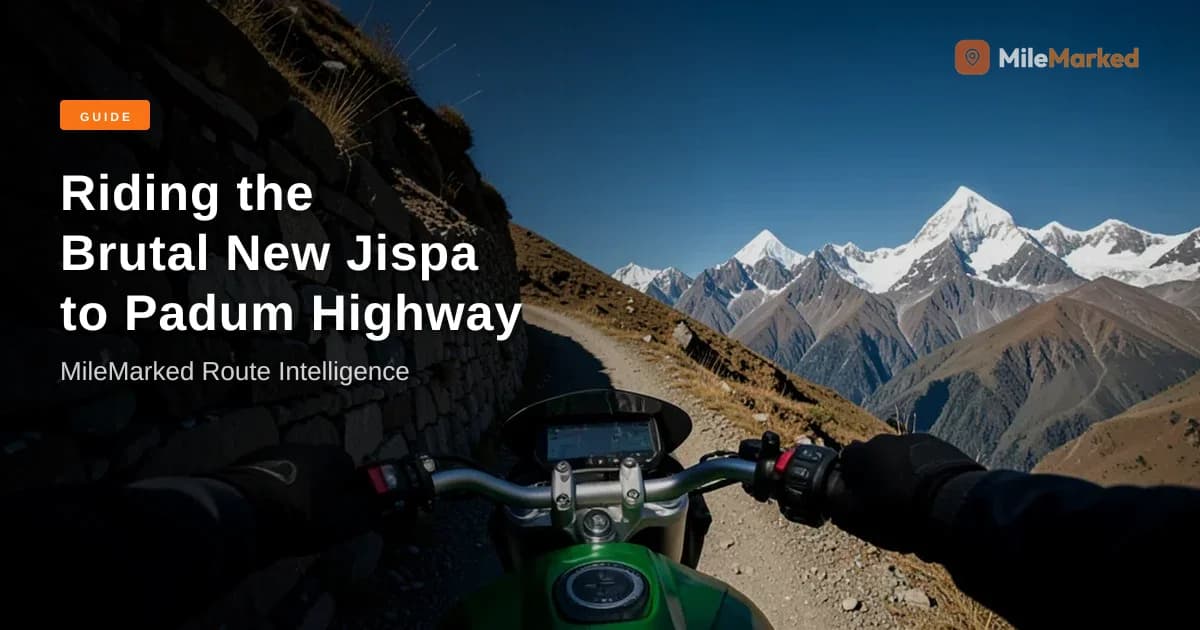
Most riders run out of fuel 40 km before Padum because zero online guides account for the real-world fuel consumption spikes caused by the 2026 Border Roads Organisation (BRO) tunnel excavations at Shinku La. Everyone talks about the scenic beauty of the Tsarap Chu valley, but nobody mentions that dragging a loaded Royal Enfield Himalayan 450 through three kilometers of pulverized talcum-fine bull dust in second gear cuts your mileage in half. If you are planning to ride the jispa to padum motorcycle route shinku la, you are about to attempt one of the rawest, most unforgiving high-altitude passages remaining in the Indian Himalayas.
Quick Summary:
- Total Distance: 140 km from Jispa to Padum via the Shinku La pass (16,580 ft / 5,054 m).
- Terrain Type: Broken tarmac, active blasting zones, heavy machinery bypasses, loose shale, and unbridged glacial torrents (pagal nallahs).
- Critical Fuel Gap: 190 km between the Indian Oil Corporation (IOCL) pump at Tandi and the sole IOCL outlet in Padum. Carry at least 5 liters of buffer fuel.
- Permits & Fees: Indian nationals do not need an Inner Line Permit (ILP) for Zanskar in 2026, but the mandatory Ladakh Ecology Fee (₹400 entry + ₹20/day) must be paid online via the LAHDC Leh portal.
- Optimal Riding Window: Mid-June to late September. Avoid late afternoon pass crossings due to raging meltwater streams.
Verified by MileMarked · Last verified: October 2026
The opening of the Nimmu-Padum-Darcha (NPD) axis has permanently rewritten the Himalayan touring playbook. For decades, accessing the isolated Zanskar valley meant taking the grueling 500 km detour from Srinagar or Leh through Kargil, Rangdum, and the Pensi La. Now, the direct connection from Darcha over Shinku La slices that transit down to a single brutal day. But treat this shortcut with casual preparation, and the pass will punish your hubris.
Route Overview, Distance, and Elevation Profile
The motorcycle ride from Jispa to Padum via Shinku La covers approximately 140 km of extreme terrain, ascending from 10,500 ft (3,200 m) at Jispa to the 16,580 ft (5,054 m) crest of Shinku La before dropping into the Zanskar plateau at Padum (11,998 ft / 3,657 m). The route demands sharp throttle control, sustained high-altitude engine performance, and precise timing to navigate water crossings safely.
Elevation (ft)
17,000 |                  ▲ Shinku La (16,580 ft)
15,000 |                 / \
13,000 |                /   \___ Gonbo Rangjon (14,200 ft)
11,000 |  Jispa        /        \
 9,000 |_(10,500 ft)__/          \_______ Padum (11,998 ft)
       +---------------------------------------------------
       0 km          45 km       80 km              140 km
When you leave Jispa on the Leh-Manali Highway (NH3), the initial stretch to Darcha (14 km) is smooth tarmac. At Darcha, you cross the bridge over the Bhaga River and divert left onto the official start of the NPD road. From here, the blacktop quickly yields to gravel, switchbacks, and construction tracks cut into sheer cliffs.
| Checkpoint / Landmark | Distance from Jispa (km) | Altitude (ft / m) | Road Surface Condition (2026 Status) |
|---|---|---|---|
| Jispa | 0 km | 10,500 ft / 3,200 m | Smooth NH3 blacktop |
| Darcha Police Post | 14 km | 11,020 ft / 3,360 m | Tarmac; mandatory trip registration |
| Chika / Ramjak | 32 km | 13,800 ft / 4,206 m | Hard-packed dirt, active blasting zones |
| Shinku La Summit | 45 km | 16,580 ft / 5,054 m | Loose shale, snow banks, rough unpaved trail |
| Gonbo Rangjon | 78 km | 14,200 ft / 4,328 m | Deep bull dust, riverbed gravel, river crossings |
| Kargyakh | 88 km | 13,300 ft / 4,054 m | Rough gravel, single-lane graded track |
| Purne | 102 km | 12,450 ft / 3,795 m | Narrow rocky shelf above the Tsarap Chu |
| Padum | 140 km | 11,998 ft / 3,657 m | Broken tarmac transitioning to paved town roads |
The ascent up the southern face of Shinku La tests your bike's low-end torque. Between Chika and the pass summit, you gain over 2,700 vertical feet in just 13 kilometers. On a carbureted machine, you will feel the oxygen drop instantly; even modern EFI bikes run noticeably wheezy. Once you crest the summit and cross into the Union Territory of Ladakh, the descent towards the base of the sacred monolith Gonbo Rangjon plunges through glacial scree fields and wide, sandy river plains.
📋 Complete Jispa to Padum via Shinku La Planning Kit on MileMarked This route has a verified day-by-day itinerary, 3 mapped fuel stops, hotel suggestions for every night, break points, and a downloadable packing checklist. Visit the Padum to Jispa via Shinku La Bike Trip trip page on MileMarked to download the complete planning kit — it's everything you need before you leave home.
What are the 2026 BRO Construction Status and Road Conditions?
Current Jispa to Padum road conditions are dominated by the massive infrastructure push of BRO Project Yojak, which is actively excavating the twin-tube 4.1-kilometer Shinku La Tunnel. This means riders must navigate ongoing road-widening, heavy tipper-truck traffic, unstable bypasses, and loose scree fields alongside massive earth-moving machinery.
       [Jispa]
          │
          ▼ (NH3 Tarmac - 14 km)
      [Darcha]
          │
          ▼ (Project Yojak Blasting Zones & Loose Shale - 31 km)
   [Shinku La Pass] (16,580 ft)
          │
          ▼ (Steep scree descent & glacial melt - 33 km)
   [Gonbo Rangjon]
          │
          ▼ (Tsarap Chu Riverbeds & Pagal Nallahs - 62 km)
       [Padum]
Project Yojak has deployed heavy industrial machinery on both portals of the pass. As a result, the approach roads on both the Himachal Pradesh side (from Ramjak) and the Ladakh side (down to Lakhang) are dynamic work sites. Expect unpredictable delays of 30 to 90 minutes when the BRO conducts controlled slope blasting, usually scheduled between 11:00 AM and 01:00 PM.
The three major hazard categories you will face on the trail include:
- Active Blasting Debris and Bull Dust: The heavy excavator movement grinds the sedimentary rock into an ultra-fine grey powder. It completely conceals fist-sized rocks and deep ruts. If you ride into a bull dust pocket at speed, your front wheel will instantly knife out. Keep your weight back, stay in second gear, and maintain positive throttle.
- Afternoon Pagal Nallahs (Mad Streams): Glaciers flanking the pass melt rapidly under direct high-altitude sunlight. Streams that are ankle-deep ripples at 08:00 AM transform into roaring, mud-choked torrents carrying submerged boulders by 01:00 PM. The crossings between the Shinku La descent and Kargyakh can wash a motorcycle out from under you if attempted late in the day.
- Unstabilised Shale Switchbacks: The descent from the pass features tight, unbanked hairpin turns covered in loose scree. One improper jab of your front brake lever will cause an immediate low-side crash on these inclines.
Pro Tip: Never enter a high-altitude water crossing in first gear unless you have no momentum. First gear delivers too much wheelspin on rounded river stones. Feather the clutch in second gear to maintain steady forward drive without breaking traction.
The physical exhaustion of this segment is compounded by the sheer altitude. Which brings us to the logistics that will make or break your expedition: fuel management.
Fuel Logistics: Managing the 190 km Gap
The absolute distance between the last guaranteed fuel station on the Himachal side and Padum is 190 km, but your bike's standard consumption metrics will not apply here. Between deep sand beds, wheel-spinning scree climbs, idling behind BRO bulldozers, and riding over 16,000 feet, motorcycle fuel consumption increases by 25% to 40%.
Where is the last fuel pump before Zanskar Valley?
The last 100% reliable commercial fuel station before you enter the Zanskar valley is the Indian Oil Corporation (IOCL) pump at Tandi, situated roughly 30 km south of Jispa at the confluence of the Chandra and Bhaga rivers. There is a small fuel outlet near Keylong, but it is notoriously prone to running dry during peak tourist months.
Once you pass Darcha, there are no operational commercial fuel stations until you reach the municipal boundary of Padum.
[Tandi IOCL Pump] ── (30 km) ── [Jispa] ── (140 km) ── [Padum IOCL Pump]
  ▲ Last reliable fuel                                    ▲ Unstable power
  └────────────── Total Unserviced Gap: 190 km ───────────┘
When calculating your fuel requirements, plan for worst-case scenarios:
- Royal Enfield Himalayan 450 / 411: Real-world consumption drops from 30 km/l down to 18–20 km/l on the NPD axis. With a 15-to-17-liter tank, you will reach Padum running on fumes if you do not carry auxiliary fuel.
- KTM 390 Adventure: Expect 19–21 km/l over the pass. Its 14.5-liter tank does not offer a safe margin.
- Lightweight Dual-Sports (Hero XPulse 200 4V): The small 13-liter tank will cut it dangerously close if you get stuck in blasting detours or make the side trek to Gonbo Rangjon.
You must carry a minimum of 5 to 7 liters of spare petrol in heavy-duty, pressure-rated jerry cans or fuel bladders. Do not rely on flimsy plastic soda bottles; high-altitude barometric drops cause thin plastic containers to balloon, rupture, or leak fuel directly over your luggage and exhaust pipes.
Furthermore, do not expect the IOCL station in Padum to be functioning smoothly when you roll into town. Padum experiences frequent, multi-day electrical outages. When the local diesel generator at the filling station fails or runs out of fuel, the pumps lock up entirely. While local grocery shops in Padum sell black-market fuel dispensed from 200-liter barrels, this fuel is frequently adulterated with kerosene and loaded with sediment. If you must use local barrel fuel, always pour it through a fine mesh filter or a microfibre cloth to save your fuel pump.
Day-by-Day Itinerary: Jispa to Shinku La to Padum
While ultra-endurance riders attempt this route in a single brutal 10-hour day, taking two days allows you to soak in the surreal raw beauty of southern Zanskar without fighting hypothermia and pitch-black river crossings.
┌─────────────────────────────────────────────────────────────┐
│ OPTION A: The 1-Day Hard Push (Advanced Riders Only)       │
│ Jispa (05:30 AM) ──> Shinku La ──> Gonbo Rangjon ──> Padum  │
│ Total: 140 km | 9-11 hours saddle time                      │
└─────────────────────────────────────────────────────────────┘

┌─────────────────────────────────────────────────────────────┐
│ OPTION B: The 2-Day Adventure Exploration (Recommended)     │
│ Day 1: Jispa to Gonbo Rangjon / Kargyakh (Camp under stars) │
│ Day 2: Kargyakh to Padum via Purne and Bardan Monastery     │
│ Total: 140 km | Split over 2 manageable 5-hour stages       │
└─────────────────────────────────────────────────────────────┘
Day 1: Jispa to Gonbo Rangjon / Kargyakh (~78–88 km)
Roll out of your accommodation in Jispa no later than 06:00 AM. The morning cold will bite through your thermal layers, but reaching Darcha before the local civil transit and supply trucks start rolling is critical.
Clear the police checkpost at Darcha quickly by presenting your vehicle registration documents and original driving licence. As you hit the NPD road, settle into a standing rhythm on the footpegs. The initial switchbacks up to Chika are steep, dusty, and flanked by sheer vertical drops with zero crash barriers.
Take a brief pause at the Shinku La summit prayer flags (16,580 ft) for photos, but limit your stationary time to no more than 15 minutes. Lingering at this altitude invites rapid-onset Acute Mountain Sickness (AMS). Drop immediately down the north face into the vast, open valley.
By noon, the dramatic silhouette of Gonbo Rangjon will dominate the horizon. This solitary, standalone peak rises vertically from the valley floor and is deeply revered by Tibetan Buddhists. A seasonal campsite operates at its base, offering basic dome tents and piping-hot Maggi and dal-rice. If you are well equipped for sub-zero night temperatures, break your journey here or push an extra 10 km down to the village of Kargyakh.
Day 2: Kargyakh to Padum (~52–62 km)
Depart your homestay or campsite by 07:30 AM. Today’s ride snakes along the churning turquoise waters of the Tsarap Chu. The road here clings to the mountain walls—expect narrow, single-lane dirt tracks with blind corners, rockfalls, and sandy dips.
You will pass the junction for Purne, the base camp for hikers crossing the footbridge toward the cliff-hanging Phugtal Monastery. If you plan to hike Phugtal, you must budget an entire rest day here. Continuing toward Padum, the valley widens past Pipiting and the historic Bardan Monastery, perched precariously atop a rock spire beside the river. Smooth asphalt finally welcomes you as you enter the town center of Padum.
📋 Complete Jispa to Padum via Shinku La Planning Kit on MileMarked This route has a verified day-by-day itinerary, 3 mapped fuel stops, hotel suggestions for every night, break points, and a downloadable packing checklist. Visit the Padum to Jispa via Shinku La Bike Trip trip page on MileMarked to download the complete planning kit — it's everything you need before you leave home.
Permits, Costs, and Essential Gear for 2026
Riding the Zanskar interior requires clear bureaucratic compliance, a sensible budget calculated in Indian Rupees, and uncompromising protective motorcycle gear.
Permit Regulations for 2026
- Indian Nationals: You do not require an Inner Line Permit (ILP) to visit the Zanskar valley or ride the NPD axis. However, you must pay the Ladakh Ecology and Environment Fee online via the official LAHDC portal (
lahdclehpermits.in). The cost is ₹400 for the one-time environmental fee plus a ₹20-per-day wildlife/red cross levy. Keep digital and physical printouts of the receipt to show at the checkposts in Darcha, Padum, and Wanla. - Foreign Passport Holders: Foreign nationals require a valid Protected Area Permit (PAP) to enter Zanskar, issued through registered travel agencies in Leh or Manali for groups of two or more riders.
Trip Budgeting Breakdown (INR)
High-altitude touring in Zanskar is remarkably affordable if you leverage community homestays rather than premium luxury camps.
| Expense Category | Estimated Cost (INR) | Practical Insights |
|---|---|---|
| Fuel (Roundtrip Buffer) | ₹2,500 – ₹3,500 | Based on ₹100/L petrol; covers detours and idling |
| Village Homestays | ₹1,000 – ₹1,500 / night | Includes traditional dinner, hot tea, and breakfast |
| Camp Sites (Gonbo Rangjon) | ₹1,500 – ₹2,200 / night | Basic dome tents with sleeping bags and shared pit toilets |
| Food & Hydration | ₹500 – ₹800 / day | Simple dhabas serving thukpa, momos, dal-chawal, and eggs |
| Ladakh Ecology Fees | ~₹500 – ₹600 total | Mandatory online receipt required at Ladakh border posts |
| Emergency Buffer | ₹5,000 in physical cash | ATMs in Padum are notoriously unreliable; carry cash from Manali |
Typical 3-Day Expense Split (Total: ~₹9,500)
┌──────────────────────┬──────────────────────┬──────────┐
│ Homestays & Food     │ Fuel & Spares        │ Cash/Fees│
│ ~₹5,500 (58%)        │ ~₹3,000 (31%)        │ ₹1,000   │
└──────────────────────┴──────────────────────┴──────────┘
Essential Gear Setup
Forget fancy street touring suits. The NPD road will chew through cheap gear. You need layered, adventure-spec protection designed for sudden temperature swings from -2°C at Shinku La to 24°C in the sunny river canyons.
- Tire Setup: Ditch purely street-oriented rubber. You need an aggressive 50/50 dual-sport tire like the Reise Moto tourR, Motoz Tractionator, or Metzeler Karoo 4. Run your tire pressures down to roughly 22 PSI front and 24 PSI rear once you leave Darcha to widen your contact patch across loose scree.
- Waterproofing Strategy: Gore-Tex or high-denier waterproof outer shells are mandatory. Carry three pairs of waterproof gloves. If you drop your motorcycle during a river crossing and soak your primary leather gloves, wind chill on the descent from Shinku La will cause severe numbness or frostnip within thirty minutes.
- Suspension Protection: Install heavy-duty neoprene fork gaiters or seal protectors. The powdery bull dust around the BRO tunnel worksites settles onto exposed chrome fork stanchions and will shred your suspension oil seals in under 100 kilometers.
The Verdict: Why Shinku La Demands Honest Preparation
I have ridden nearly every pass in the Western and Eastern Himalayas, and I have a clear, unapologetic take on this route: Do not attempt the NPD axis over Shinku La as your very first high-altitude Himalayan ride.
Too many riders buy an adventure motorcycle in Delhi, blast up the Atal Tunnel, sleep a few hours in Keylong, and attempt to conquer Shinku La the very next morning. That is a guaranteed recipe for severe altitude sickness and expensive bike recoveries. The ascent out of Darcha is unforgiving, the pass is higher than the Rohtang or Kunzum passes, and there are virtually no mobile networks (Airtel and Jio have spotty, dying 4G signals north of Darcha until you hit Padum town).
Spend at least two nights acclimatising between 9,000 and 10,500 feet (Manali and Jispa) before you aim your front wheel at the pass. Respect the mountain, start before sunrise, carry physical cash, and ride with a machine that has been thoroughly serviced. When the morning sun hits the sheer black face of Gonbo Rangjon as your thumping single-cylinder echoes off the valley walls, you will understand why the sweat was worth every single meter.
Ready to ride this epic route? Don't leave home without the complete MileMarked planning kit — verified fuel stops, hotel recommendations, break points, and a packing checklist built specifically for this route. Riders who plan with MileMarked data ride smarter and worry less. Visit the Padum to Jispa via Shinku La Bike Trip trip page to download it now.
About the Author
Parth Kapoor is the founder of MileMarked and has been riding motorcycles across India since 2019. He has personally verified routes from Ladakh to Tamil Nadu, logging over 40,000 km on Indian highways and mountain passes. Parth built MileMarked after getting lost on the Spiti circuit with an outdated itinerary — his mission is to make sure no rider makes the same mistake.
Frequently Asked Questions
What is the altitude of Shinku La pass?
Shinku La Pass stands at an elevation of 16,580 feet (5,054 meters) above sea level. It connects the Lahaul region of Himachal Pradesh with the Zanskar Valley in the Union Territory of Ladakh along the Nimmu-Padum-Darcha (NPD) road.
Where is the last fuel pump before Padum?
The last guaranteed commercial fuel station before entering the Zanskar Valley is the Indian Oil Corporation (IOCL) petrol pump at Tandi, located about 30 km south of Jispa. From Tandi to the next IOCL station in Padum, there is an unserviced gap of approximately 190 km with no operational pumps.
Is an Inner Line Permit required for Zanskar in 2026?
Indian nationals do not require an Inner Line Permit (ILP) to visit Zanskar or cross Shinku La. However, you must pay the mandatory Ladakh Ecology Fee (₹400 entry plus ₹20/day) online via the LAHDC Leh portal and carry physical receipts for checkpoints. Foreign nationals still require a valid Protected Area Permit (PAP).
Can street bikes handle the Shinku La route?
While experienced riders have pushed road-biased commuter bikes across Shinku La, it is strongly discouraged. The terrain features active BRO tunnel works, deep bull dust, unbridged glacial streams, and loose shale. A dual-sport or adventure touring motorcycle with at least 180 mm of ground clearance, spoke wheels, and 50/50 dual-purpose tires is highly recommended.
What is the best time of year to ride from Jispa to Padum?
The optimal riding window is from mid-June to late September. The pass is officially cleared of winter snow by the BRO around late May or early June, but early season conditions feature deep slush and unstable snow walls. By late October, sub-zero temperatures create dangerous black ice across the river crossings.