You know the smell. The petrichor. The first fat drops of rain hissing on scorching tarmac that has baked under the May sun for weeks. For an Indian rider, it’s a scent of relief, a promise of cooler days and lush, green landscapes. But this relief is a trap. I’ve learned the hard way that the monsoon doesn’t just wash the dust away; it awakens a whole new set of dangers on the road. This isn't just another travelogue. This is your Monsoon Alert: Urgent Safety Advisory for Riders – Regions to Avoid & Critical Precautions (June 2026), a data-driven guide built from thousands of kilometres logged on wet Indian highways. We’re going to talk about the routes that become death traps, the preparation that’s non-negotiable, and the real costs involved.
Quick Summary:
- High-Risk Zones: Avoid the Himalayas (Himachal, Uttarakhand, Sikkim), the core Western Ghats (Maharashtra, Kerala), and the remote North-East in peak monsoon (June-August).
- Critical Bike Prep: Ensure your tyres have a minimum of 3mm tread depth. Your braking distance on wet roads can easily double.
- Deadly Stretches: The Manali-Leh highway's 'pagal nallas' (mad streams) and landslide-prone districts like Rudraprayag in Uttarakhand are extremely hazardous.
- Mandatory Acclimatization: For Ladakh, a 48-hour acclimatization period in Leh is now mandatory before you can apply for an Inner Line Permit (ILP).
- Realistic Daily Budget: A solo rider should budget between ₹2,700 and ₹4,100 per day for fuel, food, and basic accommodation during a monsoon trip.
Verified by MileMarked · Last verified: June 2026
The 2026 Monsoon Reality: Why the First Rains are a Rider's Worst Enemy
Every rider romanticizes riding in the rain. The reality is far less poetic. The first showers of the season are the most treacherous. They mix with months of accumulated engine oil, diesel soot, and road grime, creating an invisible, slick film that has all the friction of a greased pan. Your tyres, which gripped tarmac with confidence just a day before, are now skating on this treacherous cocktail.
Your braking distance doesn't just increase; it doubles. A sudden stop that would take you 20 metres on a dry road now needs 40 metres or more. This is the simple physics that catches so many riders off guard. Add to this the risk of hydroplaning—where your tyres lose contact with the road surface entirely and ride on a thin layer of water—and you have a recipe for disaster.
This guide isn't here to scare you; it's here to arm you with the data and experience that separates a memorable monsoon ride from a catastrophic one. We at MileMarked believe in riding smart, which means knowing when to ride, and more importantly, when not to.
Monsoon Alert: Urgent Safety Advisory for Riders – Regions to Avoid & Critical Precautions (June 2026)
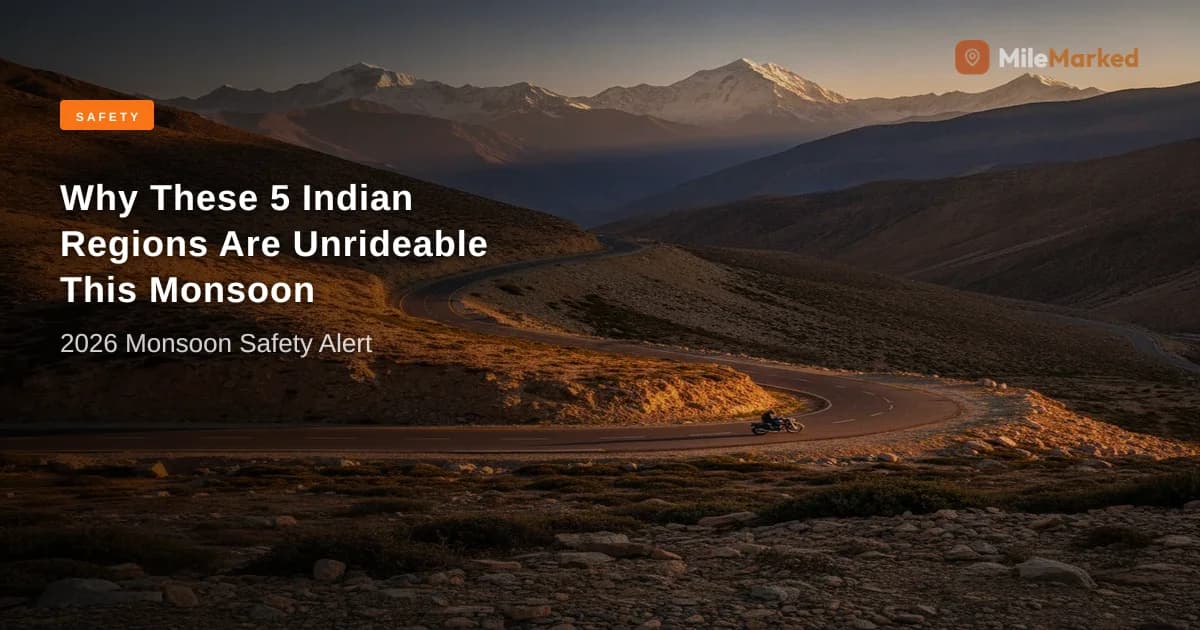
Let's be blunt: some routes are simply not worth the risk during the monsoon. While the allure of misty mountains is strong, the reality of landslides, flash floods, and washed-out roads is stronger. Based on meteorological data, past road closure reports, and community feedback on MileMarked, these are the regions we strongly advise you to avoid from late June to early September 2026.
The Red Alert Zones: 5 High-Risk Regions to AVOID
- Himachal Pradesh: The gateway to many dream rides, including the Manali-Leh and Spiti circuits, becomes notoriously unstable. The stretch from Manali to Rohtang Pass and beyond towards Gramphu is a minefield of landslides and raging water crossings.
- Uttarakhand: Known as 'Devbhumi' (Land of the Gods), it also becomes a land of unpredictable fury. The Char Dham Yatra routes, particularly around districts like Rudraprayag and Tehri Garhwal (statistically among the most landslide-prone in India), see frequent and devastating blockages.
- Sikkim & North Bengal: The ride to Gurudongmar Lake or Nathu La becomes a gamble. Intense, relentless rainfall can wash away entire sections of road, leaving you stranded for days without connectivity. The Teesta river often swells to dangerous levels, threatening bridges and low-lying roads.
- The Western Ghats (Core Monsoon Belt): While the entire range gets rain, the sections in Maharashtra (like the road to Malshej Ghat), Karnataka (Agumbe Ghat, which receives some of the highest rainfall in India), and Kerala are battered by the full force of the Southwest Monsoon. Expect near-zero visibility, road closures due to landslides, and relentless downpours.
- The Far North-East (Arunachal Pradesh & Meghalaya): While beautiful, the infrastructure here is more fragile. Routes to places like Tawang or the interiors of Meghalaya can be severed for weeks. If you get stuck here, help is a long, long way away.
A Personal Take: I've been caught in a flash flood near Chorla Ghat on the Goa-Karnataka border. One minute it was a drizzle, the next a brown torrent was trying to rip the bike from under me. Trust me, the heroic story isn't worth the genuine terror of losing control. If the forecast is for "heavy to very heavy" rain, just stay put. Find a chai stall, wait it out. The mountains aren't going anywhere.
These warnings aren't theoretical. They are based on years of data and painful experience. Now, let's dive deeper into why some of the most famous routes are the most dangerous.
Deep Dive: High-Risk Himalayan Stretches (Manali-Leh, Char Dham)
The Himalayas in monsoon are a different beast. The serene streams you see in Instagram posts transform into what locals call pagal nallas—mad, raging torrents that can toss a Royal Enfield like a toy.
The Manali-Leh Highway: A Gamble with Water and Rock
The siren call of Ladakh is powerful, but attempting it in peak monsoon is a fool's errand. The main culprit is the section between Manali and Keylong. Water crossings that are ankle-deep in May become waist-deep, fast-flowing rivers in July. The road surface, already broken, disappears under a slurry of mud and rock.
Pro Tip: Never trust a puddle, especially in the mountains. It could be a shallow splash or a deep, axle-breaking pothole. If you encounter a water crossing, always stop. Watch another vehicle cross if possible. If not, walk it first to gauge the depth and current. Your boots will dry; a drowned engine won't.
Specifically, watch out for the stretch after Rohtang Pass towards Gramphu and the infamous water crossings before Sarchu. These are not gentle streams; they are powerful, unpredictable, and demand absolute respect.
The Char Dham Routes: A Test of Faith and Patience
The pilgrimage routes in Uttarakhand (Yamunotri, Gangotri, Kedarnath, Badrinath) are sacred, but they are also ground zero for monsoon-related disasters. The combination of steep, unstable slopes and incessant rain makes this region exceptionally prone to landslides. The road to Kedarnath from Gaurikund and the highway near Joshimath are particularly vulnerable. Local authorities frequently shut down these roads for days at a time. Getting stranded here isn't an adventure; it's a serious logistical and safety nightmare.
How Do You Prepare a Bike for a Monsoon Ride?
If you must ride in the rain, perhaps on a shorter, more predictable route, your bike's preparation is the single most important factor for your safety. This isn't about fancy accessories; it's about fundamental mechanics.
Here is a non-negotiable checklist:
- Tyres are Your Lifeline: Check your tread depth. Anything less than 3mm is a serious risk. Worn tyres cannot channel water away effectively, leading to hydroplaning. If you're planning a long tour, invest in a good 80/20 dual-sport tyre with deep grooves. Check and maintain correct tyre pressure daily.
- Brakes, Brakes, Brakes: Your brakes will feel weaker in the wet. Inspect your brake pads for wear and tear. Check the brake fluid level and condition. Remember, you need to apply brakes much earlier and more gently than on dry roads to avoid locking up the wheels.
- Chain Maintenance is Crucial: Rain and road grime will strip the lubricant from your chain in no time. A dry, gritty chain wears out the sprockets and can even snap under load. Clean and lubricate your chain every 300-400 km on a wet ride, or at the end of each day. A can of chain cleaner and lube is as essential as fuel.
- Waterproof Your Electricals: Modern bikes have a lot of electronics. Water is their mortal enemy. Inspect for any exposed wires or connectors. Use a silicone sealant gel or dielectric grease on crucial connections like the spark plug cap, battery terminals, and fuse box to create a waterproof seal. A short circuit can leave you stranded in the middle of nowhere.
The Rider's Monsoon Bible: Essential Gear & Luggage Prep
Your bike is ready, but what about you? The wrong gear can turn a ride into a miserable, and even dangerous, experience. "Water-resistant" is not the same as "waterproof."
Your Personal Armour
- Rain Suit: Forget the cheap ponchos. Invest in a proper two-piece, high-visibility rain suit. A one-piece is more effective but harder to put on/take off. A two-piece allows you to wear just the jacket or pants. Ensure the seams are taped.
- Waterproof Boots & Gloves: Your hands and feet are the first to get cold and wet, affecting your control. Proper waterproof riding boots are a must. For gloves, a full-gauntlet waterproof pair is ideal. A cheap alternative is to wear surgical gloves under your regular riding gloves.
- Helmet and Visor: A clear, scratch-free visor is essential for visibility. The biggest challenge is fogging from your breath. An anti-fog Pinlock insert is the single best investment you can make for monsoon riding. It’s a game-changer.
Luggage: Keep it Dry or Regret It
Your luggage will be assaulted by water from all directions.
- Dry Bags: Use roll-top style dry bags. They are far more effective than bags with zippers, which can leak.
- Double-Bag Electronics: Your phone, camera, and power bank go into a ziplock bag, which then goes into another small dry bag, which then goes inside your main luggage. There is no such thing as too much waterproofing for your electronics.
- Trash Bags are Your Friends: Line your saddlebags or panniers with heavy-duty garbage bags before packing your clothes. It’s a cheap and surprisingly effective extra layer of protection.
Logistics & Permits: The Data Competitors Miss
This is where most online guides fail you. They show you beautiful pictures but leave you stranded when it comes to the critical, on-ground data needed to actually complete the ride. This is the core of what MileMarked was built to solve.
For example, planning a ride to Ladakh involves more than just a route map. The Inner Line Permit (ILP) is mandatory for Indian nationals to visit protected areas like Nubra Valley, Pangong Tso, and Tso Moriri.
As of June 2026, the process requires you to be in Leh. The Leh Ladakh Hill Development Council (LAHDC) has enforced a mandatory 48-hour acclimatization period in Leh before your permit application will even be accepted. This is a critical safety measure to prevent Acute Mountain Sickness (AMS). The approximate cost is ~₹400 for the Environment Fee, plus additional per-day fees for specific regions. You cannot bypass this. Planning your itinerary without factoring in these two full days in Leh will ruin your entire schedule.
Similarly, knowing the exact location of the last fuel pump before a long, empty stretch is not a "nice to have"—it's vital. The Tandi fuel station in Himachal is the last reliable stop for 365 km until you reach Karu near Leh. MileMarked's verified database has these critical points mapped, so you never have to guess.
📋 Complete Manali to Leh Highway Planning Kit on MileMarked This route has a verified day-by-day itinerary, 12 mapped fuel stops, hotel suggestions for every night, break points, and a downloadable packing checklist. Visit the Manali to Leh Highway trip page on MileMarked to download the complete planning kit — it's everything you need before you leave home.
Your Daily Monsoon Riding Budget (2026 INR Estimate)
Budgeting for a monsoon trip is different. You might need an extra day's stay due to a landslide, or you might need minor repairs more often. Here’s a realistic, no-frills breakdown for a solo Indian rider. This isn't for luxury travel; this is for a rider focused on the journey.
| Expense Category | Lower Estimate (per day) | Higher Estimate (per day) | Notes |
|---|---|---|---|
| Fuel | ₹800 | ₹1,200 | Assumes 200-250 km/day on a 350-500cc bike. Prices higher in mountains. |
| Accommodation | ₹800 | ₹1,500 | Basic guesthouse or homestay. Hotels will be more. |
| Food | ₹600 | ₹800 | 3 meals at local dhabas/eateries. |
| Contingency/Misc. | ₹500 | ₹600 | Chain lube, minor repairs, permits, chai stops. |
| Total Daily Budget | ₹2,700 | ₹4,100 | This is your operational cost once you are on the road. |
Important Caveat: This budget is based on prices from early 2026. Always verify current fuel prices and accommodation rates before you leave. The contingency fund is not optional; in the monsoon, you will use it.
Conclusion: Ride Smart, Not Hard
The monsoon transforms India into a breathtaking canvas of green. It's a tempting time to ride, but it's a season that demands respect, not bravado. It's not a beast to be "conquered." It's a powerful force of nature to be understood and navigated with intelligence.
The difference between a story you tell for years and a trip that ends in disaster lies in preparation and the humility to know when to turn back. Use data, trust local advice, and prioritize your safety above all else. The goal is not just to complete the ride, but to be able to ride again tomorrow.
Don't leave home without the right plan. MileMarked was built to give you that plan, with verified data from riders who have been there. Explore our routes, download the itineraries, and ride with the confidence that comes from being truly prepared.
About the Author
Parth Kapoor is the founder of MileMarked and has been riding motorcycles across India since 2019. He has personally verified routes from Ladakh to Tamil Nadu, logging over 40,000 km on Indian highways and mountain passes. Parth built MileMarked after getting lost on the Spiti circuit with an outdated itinerary — his mission is to make sure no rider makes the same mistake.
Frequently Asked Questions
Which regions should bikers avoid in monsoon in India?
For the 2026 monsoon, bikers should avoid high-altitude Himalayan regions like Himachal Pradesh (Manali-Leh), Uttarakhand (Char Dham routes), and Sikkim due to extreme landslide and flash flood risks. The core Western Ghats in Kerala and Karnataka, along with remote parts of the North-East like Arunachal Pradesh, are also high-risk due to intense rainfall and road washouts.
How do you prepare a motorcycle for a monsoon ride?
Focus on four key areas: 1) Tyres: Ensure at least 3mm of tread depth for grip. 2) Brakes: Inspect pads and fluid, as braking distance doubles on wet roads. 3) Chain: Clean and lubricate it every 300-400 km to prevent rust and wear. 4) Electricals: Seal exposed connectors with silicone gel to prevent short circuits.
What is the daily budget for a monsoon bike trip in India?
A realistic daily budget for a solo motorcycle trip in India during the 2026 monsoon is between ₹2,700 and ₹4,100. This covers basic accommodation, food at local eateries, fuel for 200-250 km, and a contingency fund for minor repairs or delays.
Is the Manali-Leh highway safe in the June monsoon?
No, the Manali-Leh highway is not considered safe in the peak monsoon months of June, July, and August. The risk of major landslides, especially between Manali and Keylong, is very high. Moreover, water crossings known as 'pagal nallas' become dangerously swollen, often making the road impassable for days.
What is the most essential monsoon riding gear for India?
The three most critical pieces of gear are: 1) A high-visibility, fully waterproof two-piece rain suit with taped seams. 2) A helmet visor equipped with an anti-fog Pinlock insert for clear vision. 3) Genuinely waterproof riding boots and gloves to keep your extremities dry and maintain control.
How do I avoid landslides in Uttarakhand on a bike?
While you cannot predict a landslide, you can mitigate the risk. Avoid riding during or immediately after heavy rainfall. Always check with local authorities or use platforms like MileMarked for the latest road status updates before you start your day. Pay attention to warning signs like falling pebbles or fresh mud on the road, and never stop in a designated landslide-prone zone.